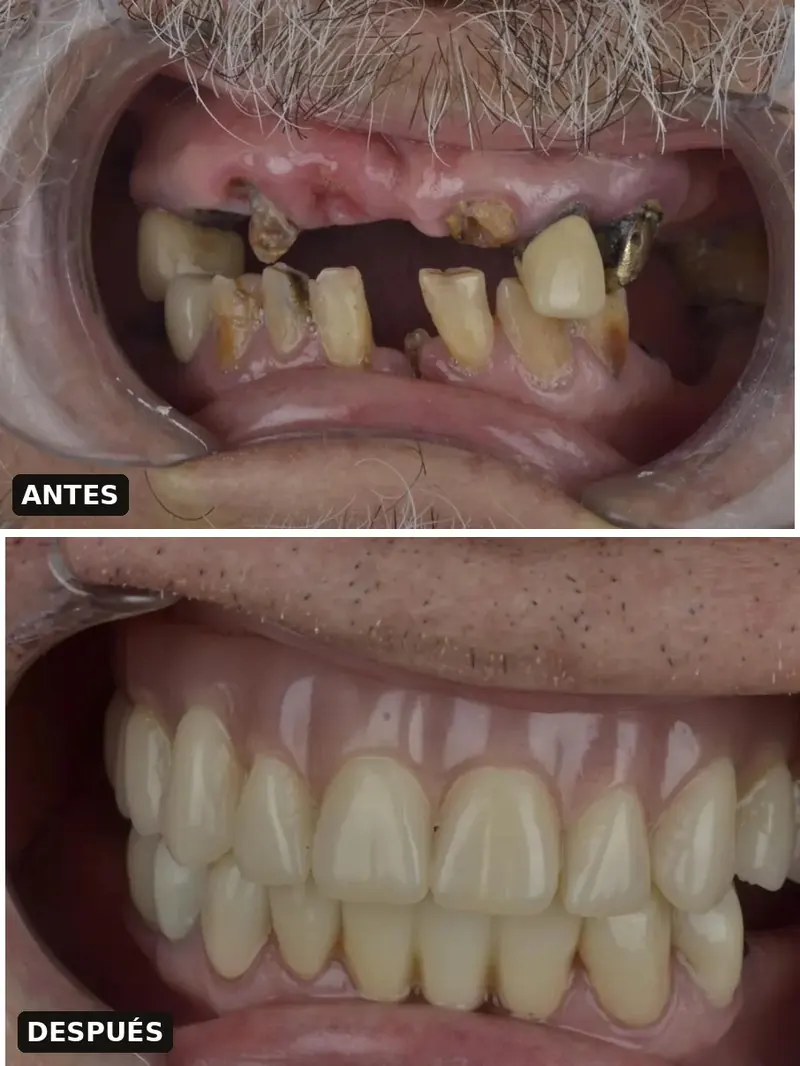
Implants replace the tooth root and do not depend on neighboring teeth, but they are done in stages. Bridges are fixed and faster but use the teeth next to the gap as anchors. Dentures are removable, the quickest and most affordable, but less stable. The best option depends on how many teeth are missing, the condition of your teeth and bone, and your priorities.
Dental implants
An implant replaces the missing tooth root and supports a crown. It does not rely on neighboring teeth and helps preserve bone. It takes longer because of healing time. See dental implants and our guide what to know before you travel.
Dental bridges
A bridge is a fixed prosthesis that replaces one or more teeth by anchoring to the neighboring teeth or to implants. It is faster than implants, but anchoring to natural teeth means preparing them. Learn more about dentures and bridges.
Dentures
Dentures are removable prostheses, either partial or complete. They are generally the most affordable and fastest option, but they can move and may need adjustments as the bone changes. Flexible partial dentures avoid visible metal clasps. Implant-supported dentures combine stability and removability.
How they compare
- Stability: implants are the most stable; dentures the least.
- Neighboring teeth: implants leave them alone; bridges prepare them.
- Time: dentures and bridges are quicker; implants need healing time.
- Bone: implants help preserve bone where the tooth was lost.
- Maintenance: all options need good hygiene and regular check-ups.
Why not wait
Leaving a gap can let neighboring teeth shift, change your bite and lose bone. Talk to a dentist about options before the gap causes other problems.
Related treatmentDentures & bridges
Written by Dr. Mynor Vinicio Luna, dentist at Clínica Dental Moon, zone 10, Guatemala City. This article is for information only and does not replace a professional evaluation.